Outcome Measurement
Part of Sponsorship research and audience evidence
Recording limitations in a sponsorship impact study
Document sampling, missing data, method changes and competing influences next to the findings they limit.
Put each material limitation beside the finding it affects. State who or what was measured, what was missing or changed, and which conclusion the evidence still supports. If a limitation changes a headline's meaning, revise the headline too.
Test each proposed finding
Write each finding in plain language. ‘Recognition rose among surveyed attendees’ is narrower than ‘the sponsorship increased recognition across the city’. The first needs comparable survey waves to support the change. The second also needs evidence about the wider population and a credible basis for attributing the change to sponsorship.
Check the source and method behind every important sentence. A limitations section at the end cannot fix a claim that stays too broad elsewhere in the report.
Keep a limitation register
For each issue that actually occurred, record the affected measure, supporting evidence, likely direction of concern if knowable, consequence for interpretation and feasible remedy. Do not invent a numerical adjustment when its size cannot be estimated.
| Possible limitation | Effect on interpretation | Response in the report |
|---|---|---|
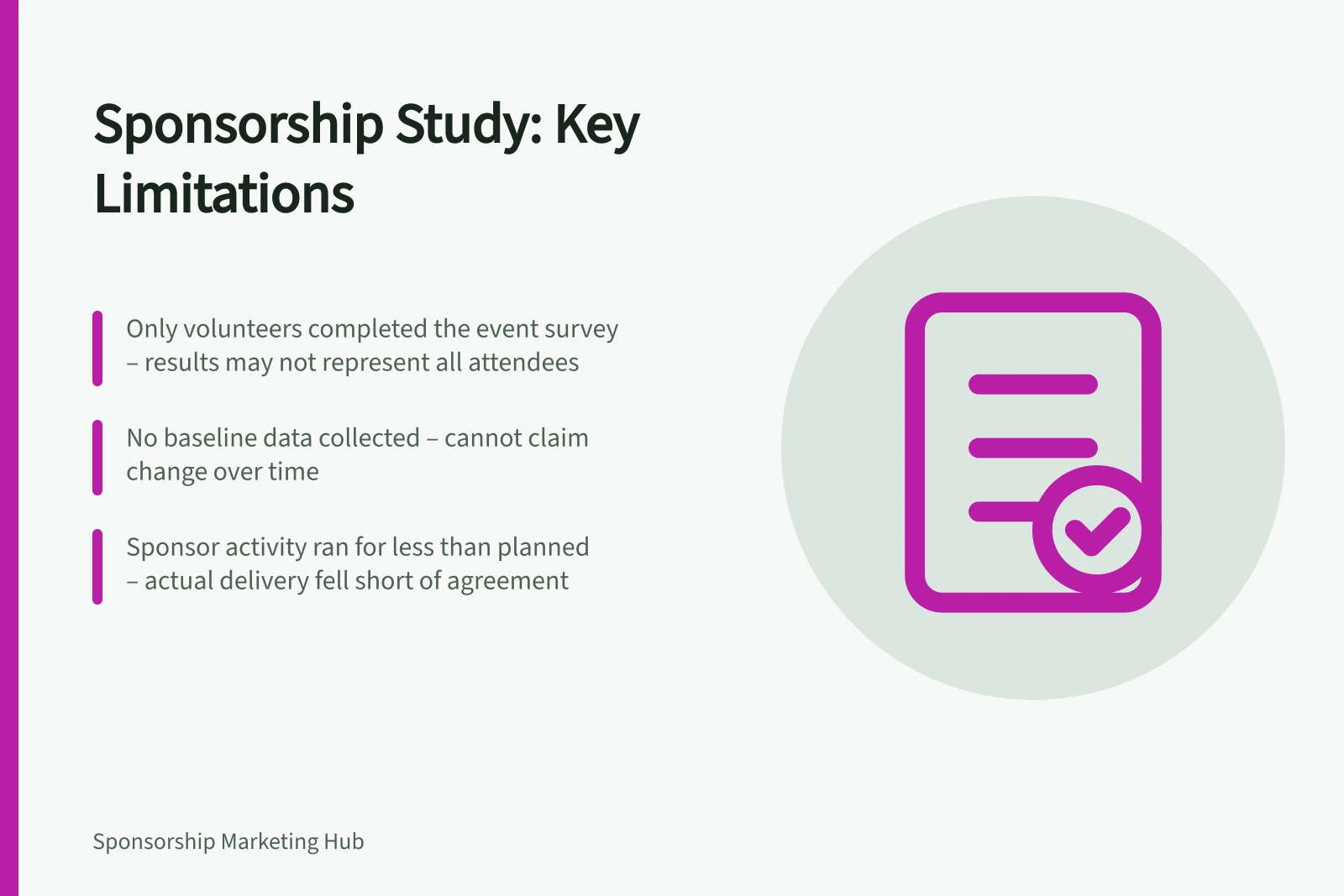
| Only volunteers answered an event survey | Respondents may differ from other attendees | Report results for respondents and describe recruitment |
| No baseline was collected | A later level does not establish change from before | Report the later level without an uplift claim |
| Question wording changed between waves | The instrument may contribute to an observed difference | Show both wordings and qualify the trend |
| Sponsor activity did not run as planned | The intended activity was not fully delivered | Record actual delivery beside the response result |
| Other campaigns ran at the same time | An observed change cannot be assigned to sponsorship alone | Describe the change without a sole-cause claim |
The rows are examples to check, not study findings.
Distinguish missing evidence from a weak result
Low recognition among a defined group of respondents is an observed result. No usable recognition responses signal a measurement gap. A sign installed for less than the agreed period is a delivery difference. Keep these cases separate so absence of evidence is not presented as evidence of success or failure.
For surveys, record eligibility, recruitment, completed responses, missing answers and any weighting. For digital figures, state the platform, period, unit and deduplication method, if any. For an outcome claim, identify other activity or changes the study did and did not account for.
Key Measurement Considerations in Sponsorship Impact Studies
- Survey Eligibility
- Recorded
- Recruitment Method
- Voluntary survey at event exit
- Weighting Applied
- Yes (to match attendee demographics)
Qualify findings where readers use them
Place a concise qualification in the executive finding, table or chart note, and in the method section. For a hypothetical voluntary event-exit survey, suitable wording might be: ‘Sponsor recognition was measured among respondents to the event-exit survey; the sample may not represent all attendees.’ Adapt the sentence to the actual method and result.
End with the decision the evidence can support. The team may repeat a delivered activity, improve recruitment or commission a stronger study if a causal estimate is essential. Keep unresolved questions in the record so the next decision rests on what was observed.