Outcome Measurement
Part of Community and local sponsorship
Measuring local recognition without inventing audience numbers
Use clear recognition questions, honest denominators and survey limitations to assess a local sponsorship.
Measure local recognition with a question and a denominator you can explain. Keep the result separate from attendance, potential reach and sales. Without a reliable audience count, report what you observed and who answered; do not guess.
Decide what recognition means
Recognition can mean naming the sponsor unprompted, recognising its name from a list, or recalling seeing it at an activity. These measure different things, so choose the question before collecting responses.
For comparisons over time, use the same wording and offer a genuine ‘don’t know’ option. Keep the question neutral; praise for the sponsor may steer answers.
A short event survey may be manageable. State where and when it was offered, who was eligible and how many people answered. If only attendees responded, call it an attendee result, not recognition among local residents. Put small sample size or self-selection limits beside the result.
Keep different counts separate
| Measure | What it can show | What it cannot show alone |
|---|---|---|
| Confirmed placements | Whether agreed sponsor assets appeared. | How many people noticed them. |
| Recorded attendance | The organiser’s count of people at the activity. | Unique sponsor exposure or recognition. |
| Survey responses | Recognition among respondents. | Recognition across the service area without a suitable sample. |
| Identifiable enquiries | Enquiries with a stated sponsorship connection. | All sales caused by the sponsorship. |
Social views, program distribution and attendance may cover the same people or different periods. Do not add them together into one audience total. Label estimates and retain the method used to produce them.
Compare results cautiously
A before-and-after question can show a difference among respondents, but a different mix of respondents can also change the result. Record where each sample came from and whether the same question was used. Without a baseline, report the later finding without claiming an uplift. Even with a baseline, a change alone does not establish that the sponsorship caused it.
Conversation notes and open responses can add context. Keep them distinct from counts; memorable comments are not necessarily representative. To estimate recognition across a broader local population, use a survey designed for that population rather than extrapolating from event attendees.
Collect only what the check needs
An anonymous recognition response often needs no name or phone number. If contact details are collected for follow-up, explain that purpose and review the applicable privacy requirements. Survey participation should not silently become permission for promotional messages.
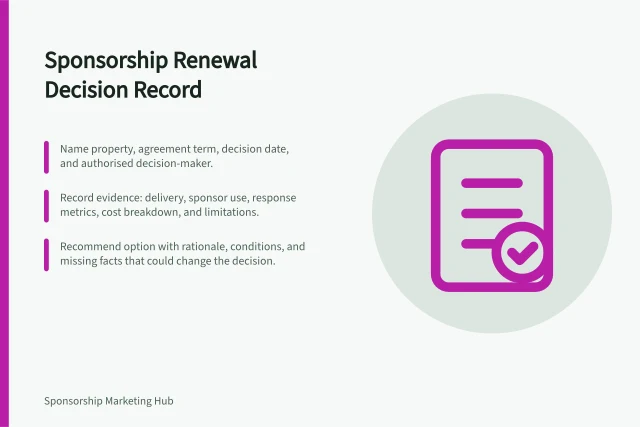
A useful report states the question, eligible group, collection method, dates, response count, result and limitations. It also records which sponsor benefits were delivered. That supports the next decision without claiming to have measured everyone.