Rights Agreements
Part of Community and local sponsorship
Agreeing on practical benefits with a small organiser
Define manageable local sponsor benefits with clear channels, owners, approvals, proof of delivery and fallbacks.
Agree benefits a small organiser can schedule, approve and verify while running its activity. A useful package may contain only a few items. Describe each promise in enough detail for both sides to know what delivery involves.
Start with what the organiser controls
Ask which channels, spaces and moments the organiser manages. It may control its programme and website, but not a council venue sign, a participant's account or a third party's mailing list. Check who must approve artwork or an on-site activity, and how much notice they need.
At the same time, discuss what the organiser needs from the sponsor. Cash, a service, equipment and volunteer help solve different problems. If support creates storage, transport or supervision work, include that in the discussion.
Turn each idea into a deliverable
Possible benefit / Detail to agree
- Programme acknowledgement
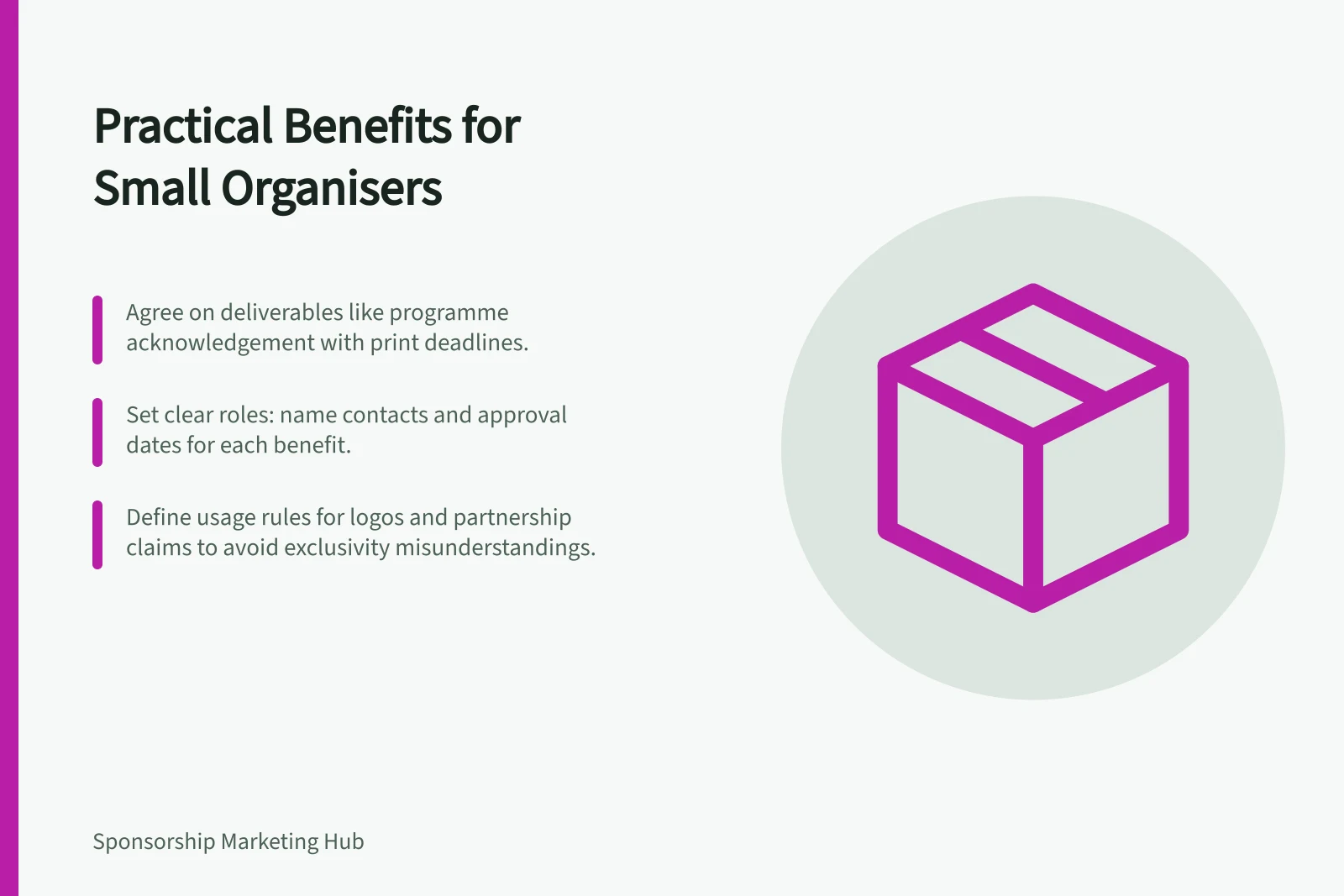
- Edition, wording, artwork, approval and print deadline.
- On-site sign
- Location, size, installer, removal and venue permission.
- Sponsor table
- Date, hours, space, staffing and permitted activity.
- Organiser post
- Channel, timing window, approved message and publisher.
These are examples, not standard inclusions. Select only benefits the organiser can deliver. If timing is uncertain, agree a window and a fallback. Avoid promising 'all events' when dates or locations remain unsettled.
Set boundaries before producing artwork
Record how each party may use the other's name and logo, for which activity and channels, and until when. Agree who approves public descriptions of the partnership. Sponsoring one event does not justify claiming to be the organisation's exclusive or permanent partner.
If exclusivity matters, define the category and the exact activity or channel covered, then check existing commitments. If access to participants is proposed, describe the interaction.
Key governance and compliance considerations for small organisers
- ACCC guidance on misleading claims
- Ensure all sponsorship promises are clear, verifiable and not exaggerated
- ACNC guidance on partnerships
- Charities must manage conflicts of interest and ensure transparency in corporate partnerships
- ACMA consent expectations
- Businesses must obtain consent before using direct marketing to promote partnerships
Give delivery an owner and a fallback
Name a contact on each side and set dates for supplying and approving assets. Agree what evidence will record delivery: a programme copy, a photograph of a sign or a record that a table session ran. A photograph shows placement at one time; it does not show how many people noticed the sign.
Decide what happens if a benefit cannot run. Another date, a substitute benefit or an adjustment to support may suit. Record the agreed approach and revisit it if circumstances change.