Activation Planning
Part of Negotiating sponsorship agreements
Planning what happens when a sponsored event is cancelled
Plan sponsor notice, benefit accounting, alternatives and payment decisions if a sponsored event is cancelled.
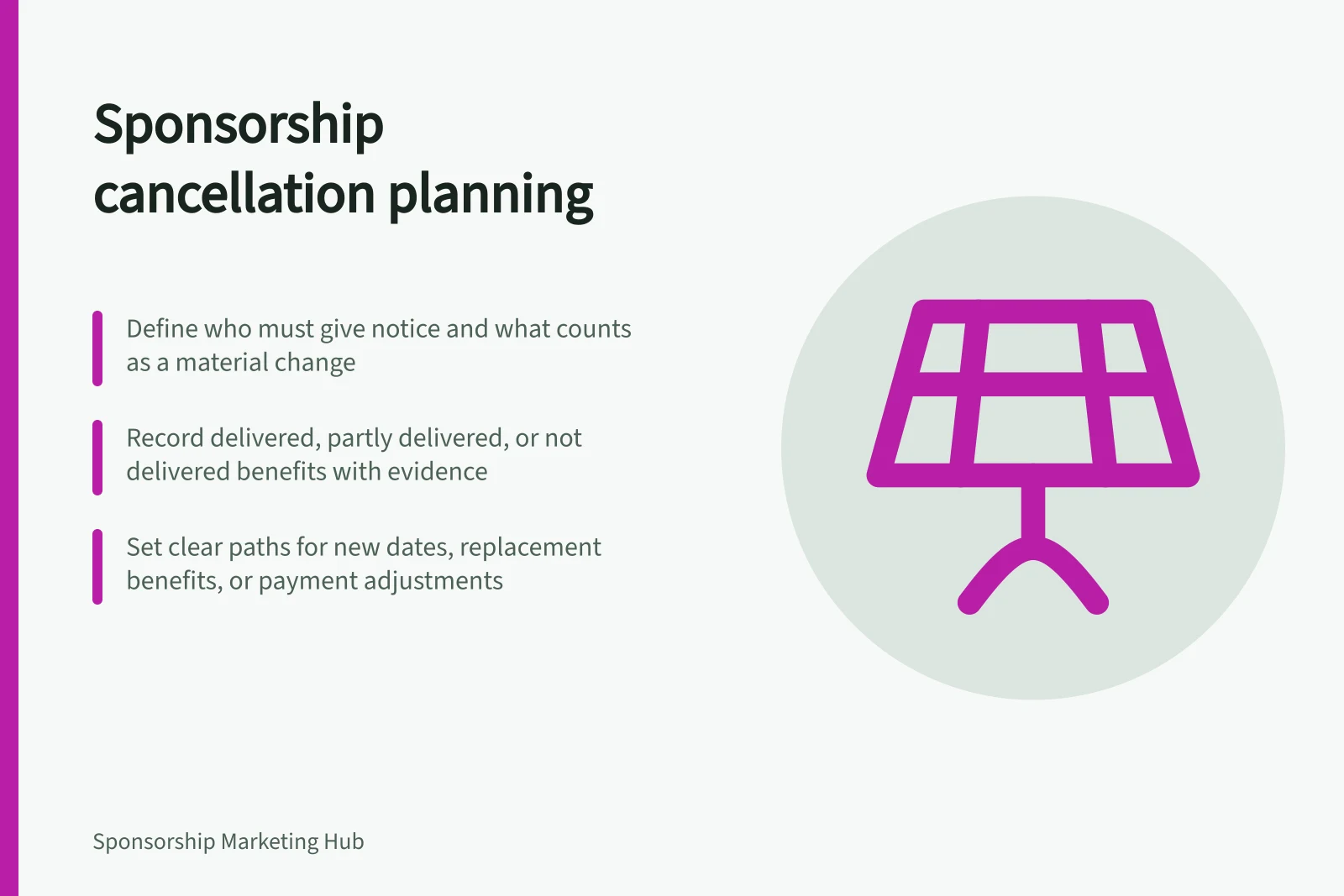
Write the cancellation process before the event is at risk. State who gives notice, what counts as cancellation or a material change, and which sponsor benefits have already been delivered. Set out how the parties will assess a new date, a replacement benefit or an end to the arrangement. Specify how payments and committed work will be considered under each path.
Define the change that triggers a decision
A postponed event, a smaller event and an event that will not run present different choices. Identify which dates, venues, program elements or participation rights are essential to the sponsor’s purpose. A new date might suit one campaign but be too late for a time-sensitive launch. A digital event might preserve a published acknowledgement while removing an in-person demonstration.
Agree on who gives notice, what information the notice must contain and when the parties must decide whether the changed event still meets the agreement. State who may accept a revised schedule. These are terms to negotiate; they do not establish the legal outcome of an actual cancellation.
Record what has and has not been delivered
Use the package schedule to classify each item as delivered, partly delivered, not delivered or still possible on a new date. Record the supporting evidence and any work or cost already committed. An organiser post that ran is different from an on-site sign that was never installed. Artwork produced by the sponsor is a cost, not proof that the organiser delivered a placement.
Keep the account factual. Do not assign an assumed share of the total fee to each benefit after cancellation unless the agreement supplies a basis for doing so.
Set choices and conditions
| Possible path | Questions to settle |
|---|---|
| New event date | Does the activity still serve the sponsor’s purpose, and can the rights and approvals move? |
| Replacement benefit | What does it replace, who controls it and how will delivery be confirmed? |
| Payment adjustment or repayment | What basis does the agreement provide after delivered items and committed costs are considered? |
| Ending the arrangement | What notice, payment, brand permissions and continuing obligations apply? |
None of these paths follows automatically from the event change. If the parties accept a new date, record the revised schedule and treatment of existing assets. If they accept a replacement, name the original item it replaces.
If they disagree, keep the delivery and cost records and follow the agreement’s dispute process. Seek legal advice if the agreement’s effect is uncertain.
Options After Event Cancellation and Key Considerations
- New Event DateDoes the activity still meet the sponsor’s purpose? Can rights and approvals transfer? Requires agreement on revised schedule.
- Replacement BenefitWhat is being replaced? Who controls the replacement? How will delivery be confirmed? Must be agreed upon by both parties.
- Payment Adjustment or RepaymentBased on delivered items and committed costs. Use agreement terms to determine fair outcome; no automatic refund unless specified.
- Ending the ArrangementRequires proper notice, settlement of payments, return of brand assets, and ongoing obligations (e.g., confidentiality).
Align public communications
Agree who announces the change and how each party may describe the sponsorship. Pause scheduled material showing the old date or an activity that will not run. Decide whether logos and sponsor descriptions may continue during postponement and when permission ends if the relationship stops. Australian business claims should remain accurate as circumstances change.
Ticket-holder refunds are a separate consumer issue. The ACCC educates consumers and businesses about their rights and responsibilities under consumer law, accepts reports of misleading behaviour and can investigate where it considers consumer law has been broken, but it does not resolve individual disputes about ticket purchases and does not provide legal advice. The settlement between an organiser and its commercial sponsor is a separate matter from the consumer ticket issue.
Close with a written decision recording the change, benefits delivered, accepted alternative, payment treatment, revised dates and authorised contacts.
Key Facts from Australian Consumer and Contract Law
- ACCC's RoleEducates consumers and businesses about rights under consumer law; investigates misleading claims but does not resolve individual ticket disputes.
- Consumer RefundsSeparate from commercial sponsorship agreements. Organisers must comply with ticket refund rules under Australian consumer law.
- Sponsorship AgreementsAre legally binding contracts. Disputes should follow the agreement’s dispute resolution process.