Outcome Measurement
Part of Conference and business event sponsorship
Measuring qualified interactions at a sponsored conference
A badge scan records contact, not qualification. Decide before the event what a useful interaction means: the person fits the intended audience, has a relevant …
Before the event, define a qualified interaction as one where the person fits the intended audience, has a relevant problem, understands the proposed next step and agrees to appropriate follow-up. Count an interaction as qualified only when all four conditions are met; a badge scan alone records contact, not qualification.
Record substantive conversations, including those that do not qualify. Assess each against the four conditions and mark whether each is met, not met or unclear. Treat an interaction as eligible for measurement once it has been recorded and assessed, so the denominator includes conversations that fail the qualification rule.
Calculate the qualified interaction rate as qualified interactions divided by eligible interactions, multiplied by 100. Report the qualified interaction count as well as the rate: a count shows volume, while the rate shows what share of assessed conversations qualified.
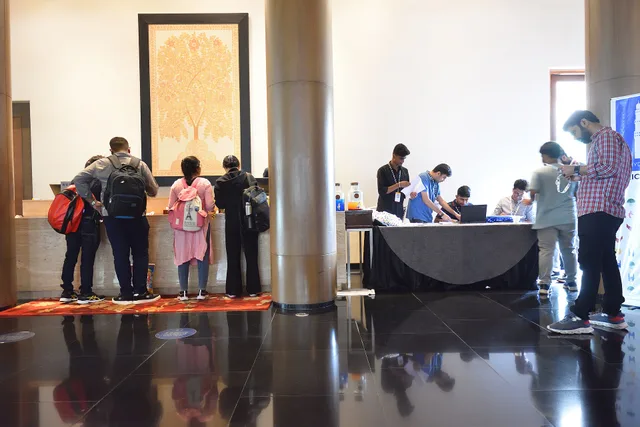
Give stand and meeting staff the same short capture form. Record organisation and role, use case, timeframe, requested action and permission status, then add minimal, factual free-text notes. If several staff speak to one person, merge the records without losing the context.
Keep a casual visitor, student, partner and potential buyer distinct in the records rather than treating every conversation as a lead. The same qualification rule should apply across activations so staff assess conversations consistently.
For each activation, record delivered sessions or meetings, eligible interactions, qualified interactions, agreed next steps and later progression. Compare both qualified interaction counts and rates, alongside the number of sessions or meetings delivered; a specialist talk may produce fewer direct conversations than a stand but more informed follow-up, while a hosted meeting may produce a small number of high-quality discussions.
You can also compare agreed next steps as a share of qualified interactions. Record the numerator and denominator for each rate, and compare like with like; do not attribute all later revenue to the event when the same account had other touchpoints.
Follow up on what the attendee requested. If they asked for product details, send those rather than adding them to an unrelated campaign. Review Australian direct-marketing and electronic-message rules before broad post-event outreach.
Post-Event Follow-Up: Direct Marketing Compliance in Australia
- Pros
- Personalised outreach increases conversion; aligns with attendee request
- Cons
- Risk of spam if not compliant with ACMA rules or without consent