Sponsorship Valuation
Part of Measuring sponsorship outcomes
Designing a sponsorship evaluation before signing
Set the sponsorship evaluation question, evidence, access, owners and reporting dates while the deal can still change.
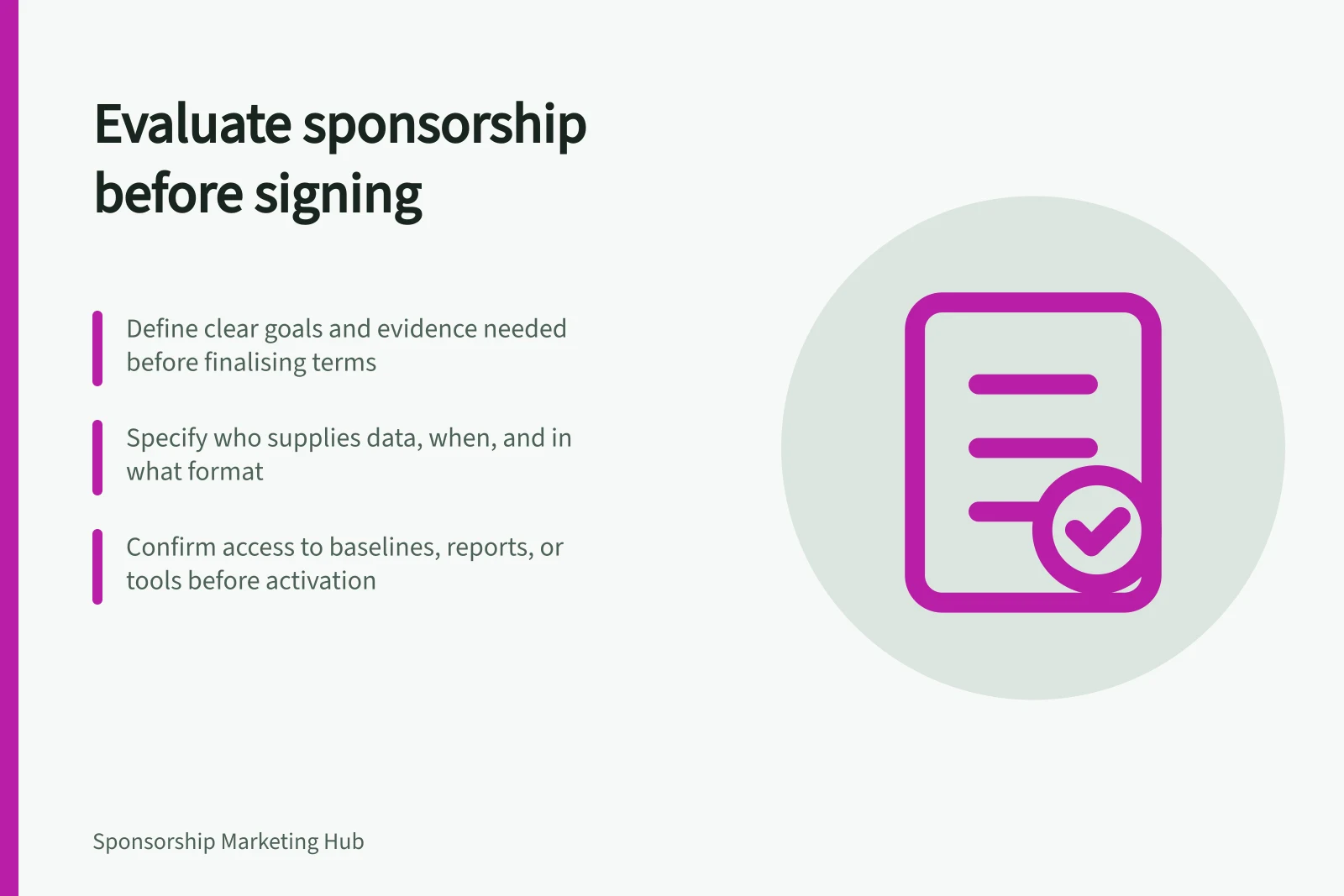
Design the evaluation while sponsorship terms can still change. Decide what the partnership should achieve, what evidence would answer that question, who can supply it, and when it must be collected. If an essential baseline, permission or report cannot be secured, change the expected claim or the package before committing.
Write the decision the evaluation must support
Start with the decision the business faces after the sponsorship: repeat, revise, narrow or stop. Frame one primary question to inform it. ‘Did the activity reach people we can serve?’ and ‘Did it generate qualified enquiries?’ need different evidence. Avoid measures no one will use.
State the intended group, activity and observation window. Record conditions that could complicate interpretation, such as a concurrent campaign or an unconfirmed event programme. Note them before results arrive.
Work backwards from each question
| Decision before signing | Record in the evaluation brief |
|---|---|
| What must happen? | The essential right or activity and intended audience encounter. |
| What will be observed? | A defined measure, what it counts and its reporting period. |
| What is needed beforehand? | A baseline, comparison, tagged destination or collection tool, where appropriate. |
| Who can provide it? | The sponsor, property or another party, with access and timing confirmed. |
| What will the finding support? | A specific later decision, with known limits. |
A promise to send a ‘post-campaign report’ is too broad. Ask what the property can actually provide for each purchased asset: perhaps a published copy, delivery date, aggregate audience report or activity record. Do not assume it can supply identifiable attendee data or a measure it does not collect.
For a recognition measure, settle the eligible group, recruitment method, question and baseline timing before activation. For enquiries, define a qualified response and how it will be recorded. If the decision requires a causal estimate of sales impact, seek evaluation expertise before signing. A convenient comparison assembled later may not answer that question credibly.
Agree on access and timing
Specify the evidence each party will supply, its format, due date and contact. Include a way to confirm a missed or changed activity while correction remains possible. Agree who pays for any survey or analysis, and who may access or use the resulting data.
If reporting depends on a venue, ticketing provider or another third party, confirm that party’s capability and permission. Do not assume the organiser can grant access.
Keep the commitment proportionate to the decision. A small local partnership might use a delivery record and, if feasible, a limited recognition check with clear sampling limits.
A causal sales question requires a suitable design and resources whatever the sponsorship fee. The decision the result will inform matters alongside cost.
Key Evidence Sources for Sponsorship Evaluation
- Baseline Data
- Required for comparison; must be collected pre-activation
- Aggregate Audience Report
- Available from event organisers or platforms like Ticketmaster Australia
- Tagged Destination
- Unique URL or phone number for tracking qualified enquiries
- Activity Record
- Documented proof of participation or exposure (e.g., signage placement)
Test the brief before signing
Ask the people who will collect and use the evidence to review a brief with the question, method, owner, dates and limitations. If they cannot explain how the result informs the later decision, revise the plan. If the property cannot provide a material record, agree another feasible measure or remove the unsupported expectation from the business case.
Keep the evaluation brief with the agreement and activation plan. If circumstances change, record any method change before interpreting the results. The later review can answer the agreed question rather than selecting whichever number looks strongest.