Outcome Measurement
Part of Sponsorship budgeting
Reviewing a sponsorship that consumed more staff time than planned
Reconcile excess sponsorship hours, trace supported causes and decide how to handle remaining work and the next budget.
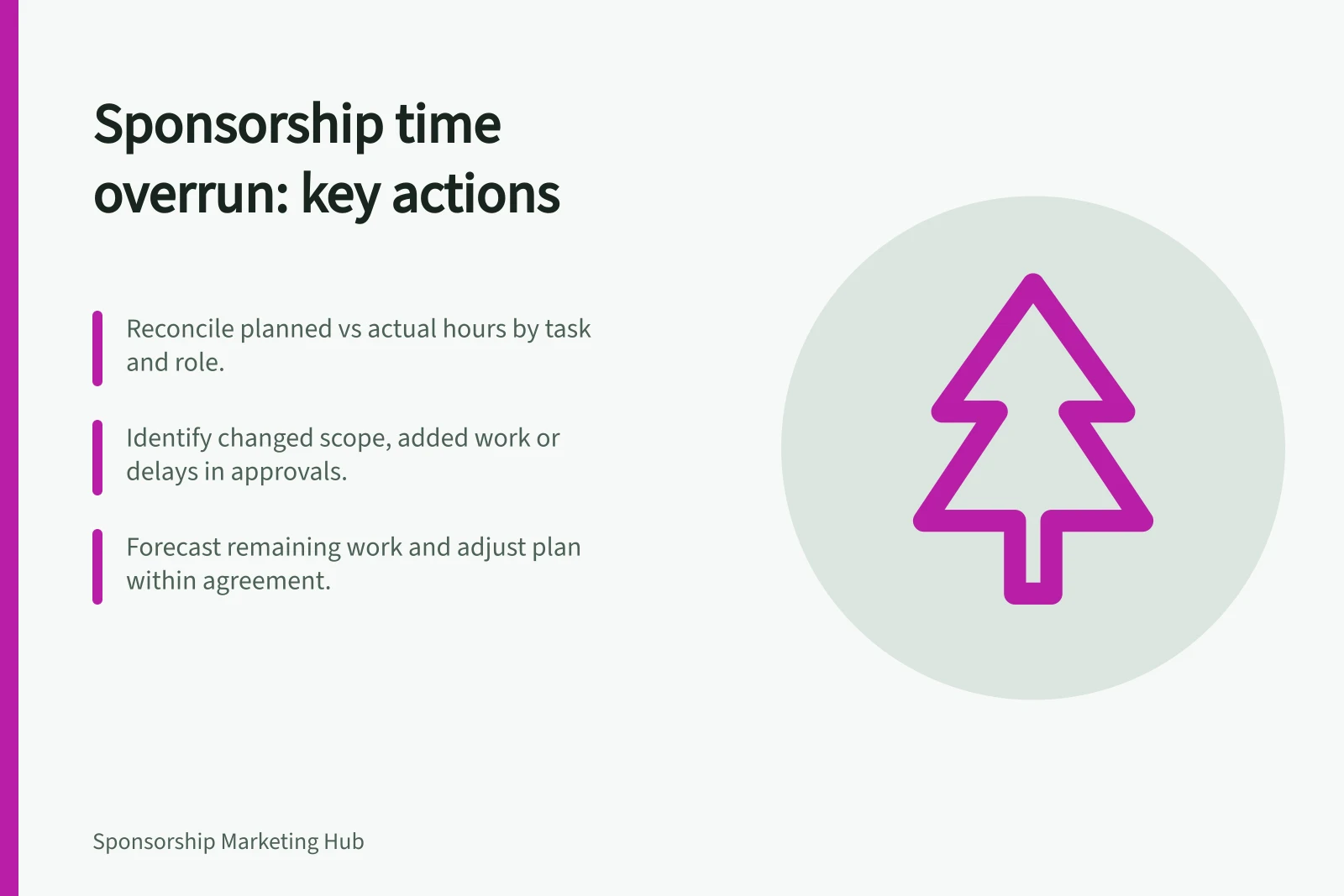
When staff time exceeds the plan, reconcile the hours, identify what changed and forecast the work still needed.
Separate an underestimated original task from a new request or change in scope. Then decide whether the remaining activity is worth delivering at its revised cost.
Steps to Reconcile a Sponsorship Time Overrun
- Rebuild the time record using calendars, task logs and staff inputReconstruct hours from available records; label as estimate with known gaps
- Identify causes of variance: scope changes, delays, or missed stepsCheck for new deliverables, approval rounds, supplier coordination, or dependency shifts
- Update forecast for remaining workAdjust projected hours based on current progress and expected tasks
- Choose response within agreement termsSimplify optional tasks, use suppliers, seek agreed changes, or discontinue non-value work
- Report outcomes and inform next budget planningCompare original, forecast and actual hours; note recurring vs one-off work
Rebuild the time record
Compare planned and actual hours by task and role over the same period. Look for work omitted from the first estimate: repeated approvals, organiser coordination, supplier briefings and follow-up. Check whether unrelated work was charged to the project, and whether shared work needs a documented split.
If timesheets are incomplete, reconstruct a bounded estimate from calendars, task records and the people who did the work. Label it as an estimate, state its gaps, and avoid presenting it as a measured total.
Question / Evidence to inspect
- What work was added?
- New deliverables, requests and accepted changes.
- What took longer?
- Task notes, approval rounds and supplier exchanges.
- Which dependency changed?
- Dated requests, responses and programme updates.
- What remains?
- Open tasks, expected hours and deadlines.
Explain the variance
Assign hours to causes the record can support. The first estimate may have missed production steps; the property may have moved a programme slot; the sponsor may have requested another version; or a supplier may have needed extra coordination. More than one cause can apply.
Leave uncertain causes open rather than turning an overrun into a blame finding.
Update the forecast for the remaining work as well as recording hours already used. An overrun to date is only part of the decision if substantial delivery still lies ahead.
Choose a response within the agreement
Check the agreed benefits and current plan before changing a promised item. Options may include simplifying optional sponsor work, using a supplier, seeking an agreed change from the property or stopping an activity that no longer serves its purpose. A budget review alone does not cancel a contractual obligation or authorise a replacement benefit.
For each feasible option, show remaining cash, staff hours, the audience activity preserved and the approval required. Give the choice to someone authorised to change scope or spending. Record the accepted plan and brief those delivering it.
After delivery, compare original, forecast and actual hours by task. Note which work is likely to recur and which arose from an unusual change. Put the extra staff cost beside the rights fee and supplier spend, while reporting audience responses separately. The next budget can then reflect the work this sponsorship actually required.